
How to Add Philanthropy to Your Business Model

Vancouver-based eyewear retailer Clearly has no shortage of ambition when it comes to giving back. “About 2.7 billion people globally—including almost 2.5 million Canadians—suffer from uncorrected poor vision,” says Clearly CEO Arnaud Bussieres, who took the top job in 2018. “It’s our duty as market leaders to take care of this problem.”
Clearly has donated more than 600,000 pairs of glasses to people in need since 2010—chiefly because it set out to meet those specific numbers early on. The company treats its philanthropic goals like any other business objective, which means setting measurable targets.
The company organizes its philanthropic efforts into three pillars. The first, “Clearly for Community,” offers twice-monthly pop-ups located near Clearly stores that provide vision care to underserved groups. Clearly works with partners that are already active in the community, such as Vancouver’s Gathering Place, a downtown centre that serves low-income individuals, people with disabilities and people experiencing homelessness.
Clearly’s second philanthropic pillar is an in-store initiative. At each of the firm’s seven locations across Ontario, Alberta and British Columbia, children age 10 and under can get a free pair of eyeglasses each year as long as they have a recent prescription and a health card. The company is thereby making a commitment to serving the 30 per cent of Canadian children who use or need vision correction.
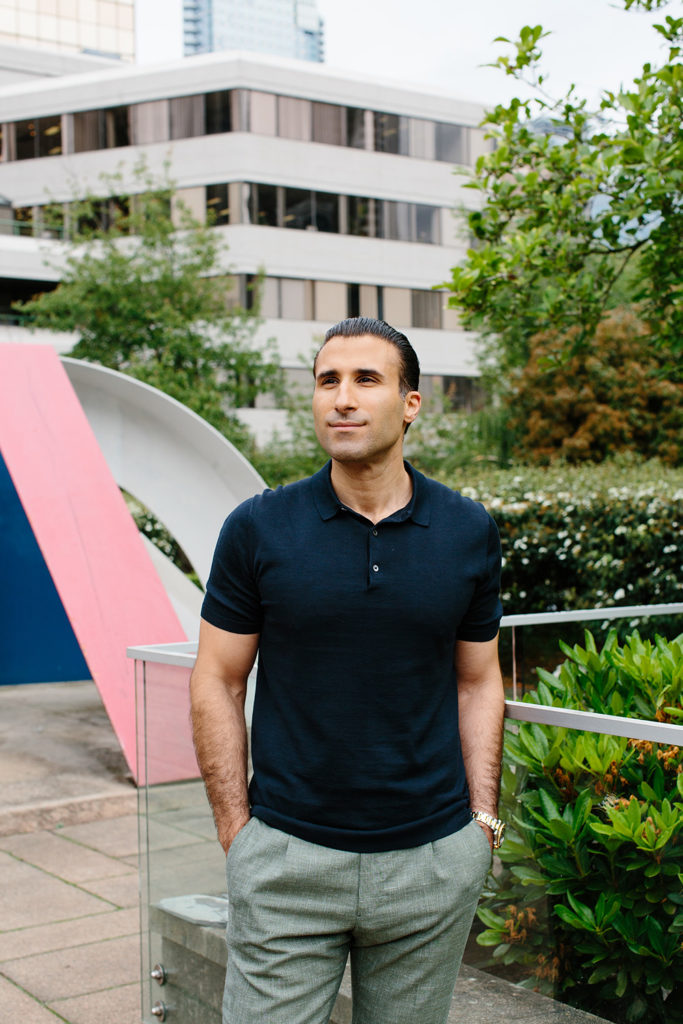
The third pillar is a partnership with Vision for Life, a social-impact fund managed by Clearly’s parent company, EssilorLuxottica. Clearly donates a pair of glasses for every pair purchased to underserved communities in more than 42 countries—including Bangladesh, Zambia and India—in partnership with dozens of global NGOs. “I think we’re seeing a big shift in the importance of developing societal impact within business,” says Dr. Justin Asgarpour, an optometrist and chief vision and mission officer at Clearly. “That very much resonates with the public. I think it enhances trust among both customers and team members.”

Clearly spends more than a million dollars per year supporting its humanitarian mission—an investment that has gradually scaled up with the growth of the company. The cost of these programs is built directly into Clearly’s business model and budget. “Our mission is foundational and fundamental to Clearly, so it needs to be planned at every level,” says Asgarpour. “For an initiative to be scalable and long-serving, it needs to be sustainable.”
Labour costs for community vision events are not part of that equation since volunteer work is built directly into Clearly’s staffing model. Each employee, no matter what department they work in, is expected to contribute a minimum of eight volunteer hours for vision pop-ups each year. “Leveraging the human power of our teams not only reduces labour costs for these events but also helps engage the team in our overall mission,” says Asgarpour.
As with any ambitious philanthropic goal, the key is to break it down and take it step by step, says Bussieres. Clearly’s specific initiatives keep the organization moving toward a common objective while engaging staff and building partnerships with other organizations. “It’s nice to be able to draw a really clear ROI model on every initiative you establish,” says Asgarpour. “But sometimes, taking a step back and looking at the impact you can have is a really important exercise.”