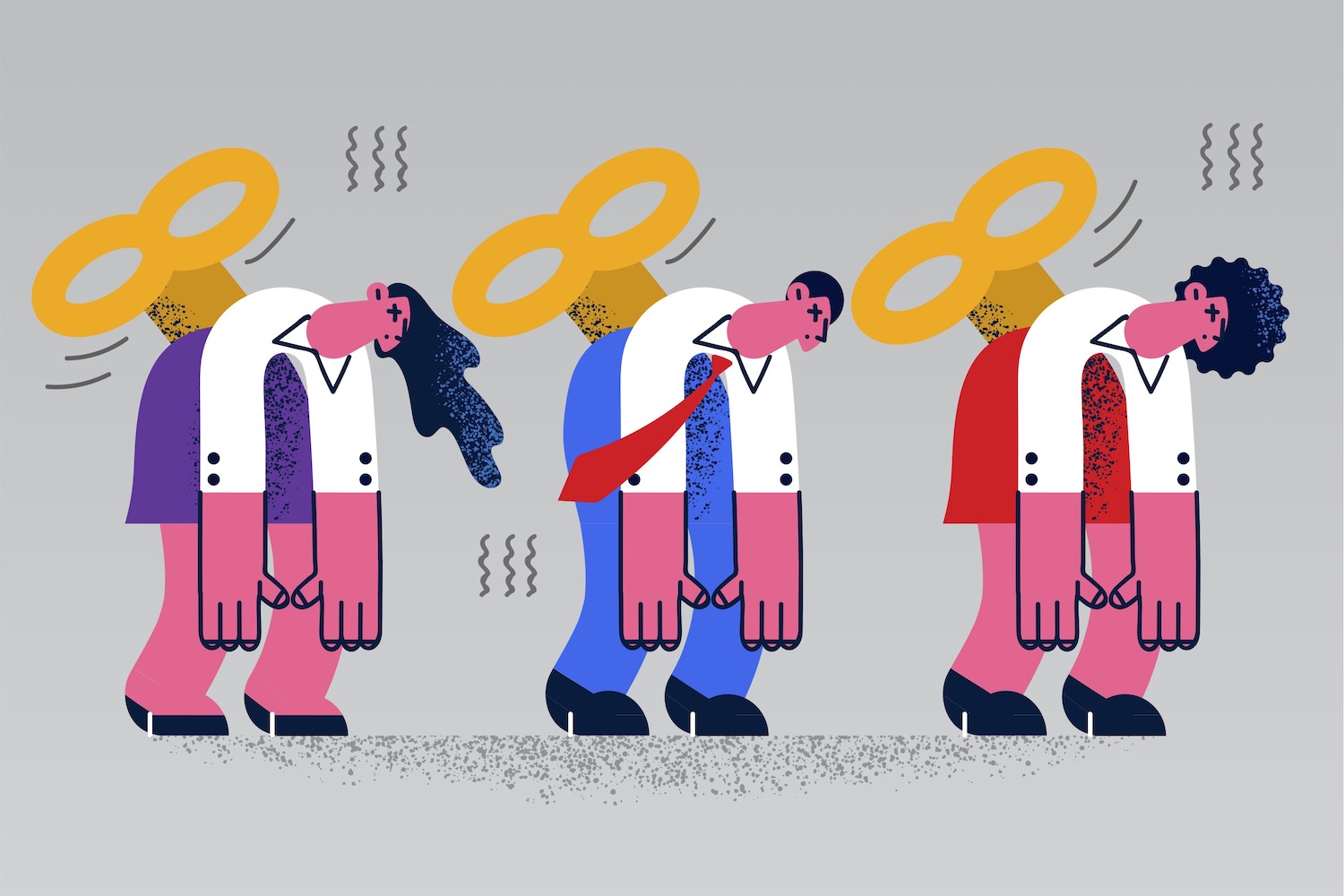

Too Many Daily Choices Can Lead to Decision Fatigue. Here’s How to Combat It
When the pandemic hit and he started working remotely, Luke Vigeant’s days became much busier than they had been when he was in the office. He faced back-to-back Zoom meetings without much of a break as his company grew and needed to hire more staff. As the cofounder and president of Toronto-based Inkblot, which provides virtual therapy for individuals and organizations’ employee-assistance programs, Vigeant was relied on by his team to make important decisions daily. But the pandemic took his schedule to the next level.
Pretty soon, he was experiencing worsening decision fatigue: the weariness that accompanies having to make too many choices in one day. Coined by social psychologist Roy F. Baumeister, the term refers to the idea that the quality of your decisions is inversely proportional to how many you make. In other words, exhaust your faculties and suffer the consequences of suboptimal decision-making.

Living through a pandemic, we’re all facing some degree of decision fatigue, but bosses may be especially hard hit, says Rachel Toledano, a psychologist and Inkblot’s VP of clinical services. “What we’re seeing right now is a severe depletion of energy in some leaders,” she says. Pivoting business practices to adjust for Covid protocols or compensating for labour shortages can quickly pile on the number of decisions a leader has to make on a daily basis. What’s more, change, in any form, is a stressor that requires adaptation and adjustment, which also zaps energy.
To cope, Vigeant decided to lean on others in similar situations. He meets with a business-founders group every Friday night. “We’re able to be vulnerable in a peer group in a different way than with our colleagues, and can talk through the decisions we made—right and wrong,” Vigeant says. “It helps to know you’re not alone in making difficult choices.”
He has also made an intentional effort to only weigh in when he is needed. Micromanaging increases the number of decisions you have to make, which drains your capacity to make higher-level decisions where your leadership skills matter most, Toledano says. Vigeant lets his team members do their jobs and make calls on projects they’re working on without his input. “We’re in the midst of changing our rates so we can better pay our counsellors, and it would be very easy for me to get heavy-handed with a change like this,” he says. “Instead, I’ve empowered our practitioner network to weigh in on the issue and play a large role in making the decisions.”

Inkblot is also big on ditching the looming sense of urgency at work—not only is it stressful but it’s probably doing more harm than good. “The sense that every decision is urgent is common with high performers in the corporate world,” says Toledano. “But you’ll make better ones if you take a step back and prioritize.” That means learning to postpone making a decision when you feel like your faculties are exhausted for the day or saying no to an unrealistic request. “You have to stay accountable to the people you work with, but it’s better to make the right decision later,” Vigeant says.
Inkblot’s company culture encourages workers to be honest about their mental and emotional capacity in meetings, which eases the pressure to make choices in a sub-optimal frame of mind. “We distinguish between decisions that absolutely need to be made at a given time and those that can wait,” Vigeant says. “I think that leads to better decision-making in the long run.”